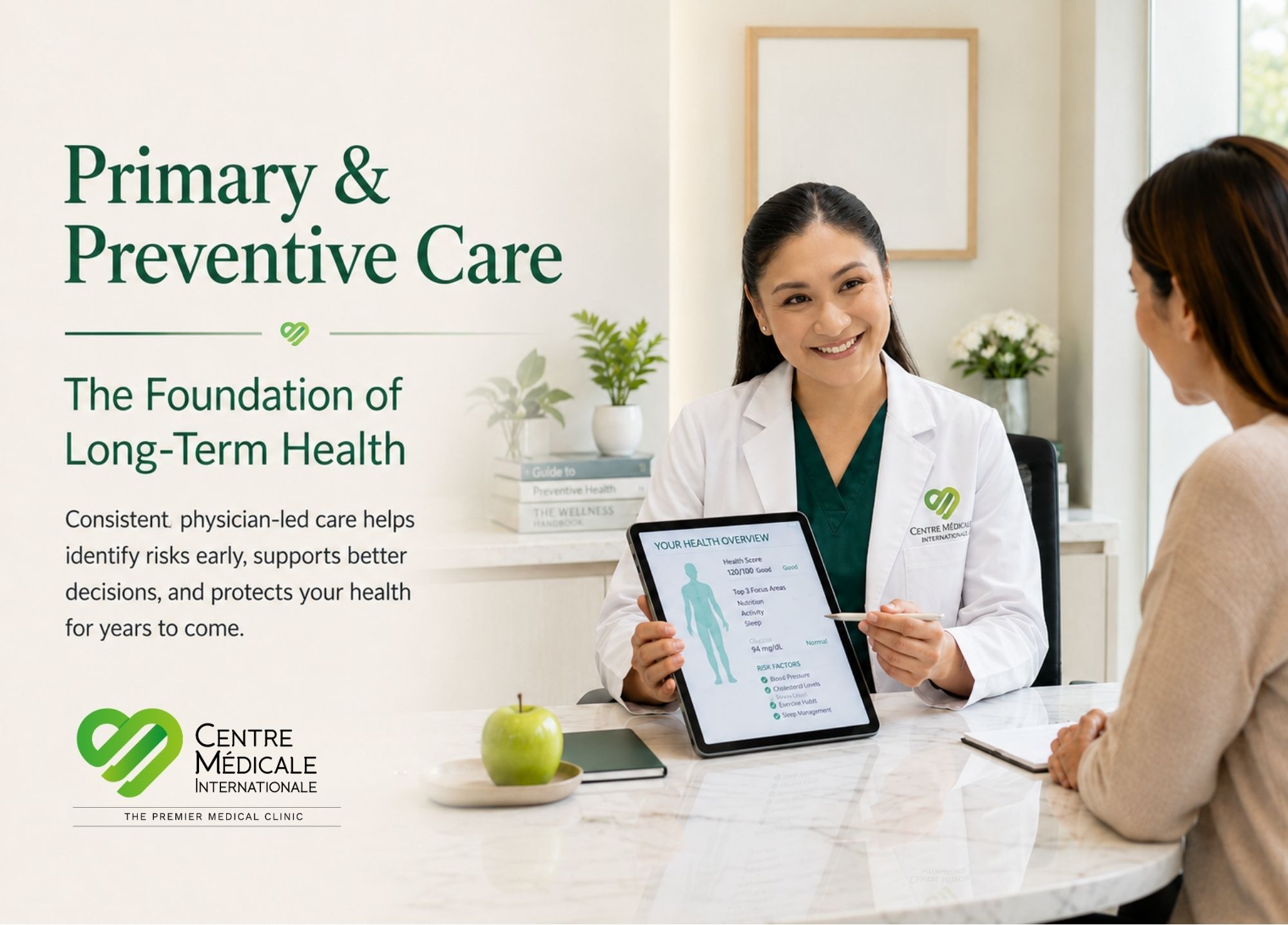
High-quality healthcare does not begin only when symptoms appear. It begins with knowing the patient, understanding risk, and guiding care over time.
For many people, healthcare is sought only when something feels wrong. A fever, persistent pain, abnormal laboratory result, or sudden concern often becomes the reason to see a doctor. While timely treatment is important, long-term health is better protected when care is consistent, coordinated, and guided by a physician who understands the patient’s broader clinical context.
This is where primary and preventive care become essential.
Primary care serves as the first point of contact in the healthcare system. It brings together acute illness management, chronic disease care, preventive health services, and long-term health monitoring. The World Health Organization describes primary health care as a person-centered approach that supports health needs across promotion, prevention, treatment, rehabilitation, and more.
At CMI, this means care is not viewed as a one-time transaction. It is a continuing relationship built around the patient’s health history, lifestyle, risk factors, priorities, and goals.
The value of a long-term primary care relationship
A deeper view of the patient allows the doctor to make more considered decisions. Over time, a primary care physician becomes familiar with a patient’s medical history, family history, lifestyle patterns, previous results, and recurring concerns. This continuity matters because many health risks develop quietly. High blood pressure, abnormal blood sugar, cholesterol concerns, early organ changes, and some cancers may not cause symptoms in the beginning. Regular care allows these risks to be identified earlier, monitored properly, and addressed before they become more difficult to manage. The goal is not simply more consultations or more tests. The goal is the right care, organized around the patient.
Preventive care: protecting health before illness advances
Preventive care focuses on reducing health risks, detecting conditions early, and maintaining overall well-being. It may include immunizations, routine screening tests, cancer screening, lifestyle counseling, and monitoring of important clinical parameters. The CDC describes preventive care as including screenings, vaccines, and counseling that help patients make informed health decisions.
In everyday practice, this may involve guidance on diet, physical activity, smoking cessation, alcohol moderation, vaccination schedules, and regular monitoring of blood pressure, blood sugar, cholesterol, weight, and other relevant health markers. This approach is proactive rather than reactive. It helps patients understand what needs attention now, what can be monitored, and what should be prevented from progressing.
Cancer screening in the primary care setting
Cancer screening is an important part of preventive care. Screening checks for certain cancers before symptoms appear, when treatment may be more effective. The CDC notes that regular screening may help find breast, cervical, colorectal, and lung cancers early, when treatment is more likely to work best.
Common screening services may include:
• Colorectal cancer screening, such as FIT or colonoscopy
• Breast cancer screening, such as mammography
• Cervical cancer screening, such as Pap smear or HPV testing
• Prostate cancer assessment, including PSA when clinically appropriate
Not every screening test is necessary for every patient. The decision should depend on age, sex, personal risk, family history, symptoms, previous results, and current clinical guidelines. For example, prostate cancer screening with PSA requires an informed discussion between patient and physician because benefits and risks vary by individual.
This is why screening is most valuable when interpreted in context, not as a checklist, but as part of a thoughtful health plan.
Continuity supports better chronic disease management
Regular primary care also plays a key role in managing long-term conditions such as hypertension, diabetes, dyslipidemia, asthma, thyroid disease, and other chronic concerns.
Follow-up visits allow the physician to monitor changes, adjust medication when needed, review test results, reinforce lifestyle plans, and coordinate care with specialists when appropriate. This helps keep management responsive rather than delayed.
When care is fragmented, important changes may be missed. Patients may receive isolated results without clear interpretation. Recommendations may become inconsistent. Over time, this can lead to delayed diagnosis, higher complication risk, increased healthcare costs, and less coordinated care.
A strong primary care relationship helps reduce these gaps.
Preventive care across the lifespan
Health needs change over time. Children require immunizations, growth monitoring, and developmental assessment. Adults benefit from risk evaluation, screening, lifestyle guidance, and early management of emerging conditions. Older adults may need closer monitoring of chronic disease, functional health, cognition, mobility, medication use, and quality of life. Primary and preventive care provide continuity across these life stages. They help ensure that health decisions evolve as the patient’s needs change.
The patient’s role in long-term health
Effective prevention also depends on patient engagement. Patients play an active role by establishing care with a primary care physician, following recommended screening and vaccination schedules, attending regular follow-up consultations, and monitoring key health indicators. Healthcare works best when it is shared. The physician provides clinical judgment and guidance; the
patient contributes participation, honesty, and consistency.
Health thought through
At CMI, primary and preventive care are designed to support more consistent, coordinated, and long-term health. Care begins with proper assessment, continues through thoughtful monitoring, and is supported by specialists when needed. Because better health is not only about responding to illness. It is about understanding the person, identifying risks early, and guiding care with clarity over time.
For primary care, preventive health planning, and screening guidance, speak with a CMI Primary Care Physician.
To learn more about Primary and Preventive Care, you may watch the full video through this link: