


THE OTHER BURDEN OF BEING A PATIENT
By Gary de Ocampo
President, Centre Médicale Internationale
When care becomes complex, patients should not have to carry the additional burden of navigating every appointment, test, referral and next step on their own.

Modern healthcare has grown remarkably sophisticated. There are more specialists, advanced diagnostic tools and medical information available than ever before. Yet when something feels wrong and the cause is uncertain, figuring out where to begin, what needs investigating and how the different pieces fit together can become a burden in itself.
A sensible outpatient journey starts with a clinical assessment. Primary or urgent care can establish what may be happening, guide appropriate investigations and determine whether specialist attention is warranted. Diagnostic testing should answer a clinical question. CT scans and X-rays can be invaluable, but they also expose patients to ionizing radiation. The decision to investigate deserves careful judgment about what the test may add to the patient’s care. More testing is not necessarily better medicine.
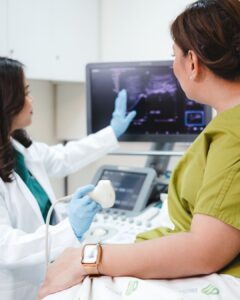
The practical work can accumulate quickly: arranging appointments, tracking referrals and gathering results. Different specialists may need to see the same patient, while consultation time may leave little opportunity to explain the full history, consider everything that has been found and understand what should happen next.
There is a reason some newer clinics have taken inspiration from hotels, creating elegant and tranquil environments that make seeking medical care more comfortable. That has real value. But there is also a risk that the visible trappings of luxury become a stand-in for the less visible work of medicine: understanding the patient, choosing investigations carefully, bringing the right expertise together and thinking through what comes next. A beautiful setting can improve the experience. It cannot make the care attentive by itself.
A beautiful setting can improve the experience. It cannot make the care attentive by itself.

Centre Médicale Internationale (CMI), located in the heart of Bonifacio Global City, has brought those elements together in an outpatient setting. Multiple specialties are available within an elegant, tranquil environment, while Patient Care Specialists help coordinate consultations, diagnostics and follow-up. When several specialists are needed, appointments can be arranged together where clinically appropriate and schedules permit.
If inpatient treatment becomes necessary, CMI physicians can facilitate handover to an appropriate hospital. After the procedure, the patient can return to CMI for post-operative follow-up. The pharmacy can help locate medicines that may be difficult to find and arrange delivery where appropriate. Mobility and accommodation needs can also be attended to.
Attentive medicine is clinical judgment supported by attention to the details around the patient.
The patient remains the decision-maker. They simply should not have to manage the healthcare system around their own care.
CENTRE MÉDICALE INTERNATIONALE
The country’s premier medical clinic, located on the 2nd Floor of ORE Central Tower, 31st Street corner 9th Avenue, BGC, Taguig City. Open every day from 8:00 AM to 5:00 PM.
Read the full article: https://www.manilatimes.net/2026/09/11/supplements/the-other-burden-of-being-a-patient/2421939