


Executive Health Beyond the Executive Checkup
By Gary de Ocampo
President, Centre Médicale Internationale
When I entered healthcare, I expected to spend most of my time learning about medicine.
That was a reasonable assumption. For more than twenty-five years, my professional life revolved around market research, consumer behavior, and helping organizations make better decisions. Healthcare was something I experienced much like everyone else: through periodic consultations, annual checkups, and the healthcare journeys that inevitably accompany family life and advancing age. Like many professionals, I viewed healthcare primarily from the outside. I assumed the most important things happening were the consultations, the tests, the diagnoses, and the treatments.
What surprised me was how much healthcare reminded me of market research.
One lesson I learned very early in my research career is that data rarely speaks for itself. A market share figure, customer satisfaction score, or awareness metric may look important, but experienced researchers know that the first question is never, “What is the number?” The first question is usually, “Compared to what?” Compared to last year? Compared to competitors? Compared to expectations? Compared to historical trends? Without context, a number can be interesting without being particularly useful.
The longer I spend in healthcare, the more I realize that medical information works much the same way.
A laboratory result, imaging finding, or health indicator rarely exists in isolation. Every finding has a history. It has context. It has a broader story around it. A cholesterol level that appears concerning on its own may look very different when viewed alongside previous results, family history, lifestyle factors, cardiovascular risk, and other clinical findings. The information itself has not changed. What changes is the understanding that emerges when the information is placed in context.
This realization gradually changed the way I think about executive health.
Like many professionals, I once thought of executive checkups primarily as collections of tests. You undergo a series of investigations, receive a report, review the findings, and hopefully discover that everything is generally well. There is certainly value in that process. Preventive healthcare remains one of the most important investments a person can make, particularly as professional responsibilities grow and health risks become more consequential.
What I have come to appreciate, however, is that the tests themselves are only one part of the journey.
Imagine a senior executive who completes a comprehensive health assessment. A few weeks later, the report arrives. It is professionally prepared and thoughtfully organized. Findings are summarized. Recommendations are included. Nothing appears immediately alarming, which is reassuring. At the same time, several issues deserve attention. Cholesterol levels may require management. Blood sugar may need monitoring. An imaging study may reveal a finding that warrants observation. A specialist consultation may be recommended.
At this point, the executive faces a challenge that is remarkably familiar to anyone who has ever managed a business.
There is information, but there is not yet clarity.
The report explains what was found. It does not necessarily explain what deserves attention first. It may identify several areas for action, but it cannot fully answer the questions that naturally follow. Which issue matters most? Which recommendations are precautionary and which are more urgent? What should happen next? How do these findings relate to one another? What are the consequences of acting now versus waiting?
These are not questions about information. They are questions about interpretation and judgment. 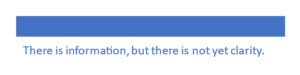
Throughout my years in market research, clients never commissioned studies because they wanted charts, tables, dashboards, or beautifully designed presentations. Those things certainly helped communicate findings, but they were never the reason the research existed. Organizations invested in research because they wanted better decisions. The information was a means to an end, not the end itself.
I have come to see executive health through a similar lens.
People do not undergo health assessments because they want more reports. They undergo assessments because they want to make better decisions about their health, their future, their families, and the lives they are trying to build. The report matters, but only to the extent that it helps create understanding.
This perspective has also influenced how I think about executive checkups themselves.
When I first entered healthcare, I assumed that a better executive checkup simply meant a more comprehensive one. 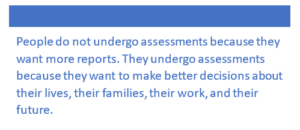 There are certainly situations where broader testing is appropriate, and modern medicine has given us remarkable diagnostic capabilities. Over time, however, I found myself asking a different question. Rather than asking how many tests should be included in an executive health package, I began asking whether we were starting with the right questions in the first place.
A forty-five-year-old executive who spends much of the year traveling internationally faces different health considerations from a business owner managing diabetes and hypertension. Both are different again from a senior leader who appears healthy but carries a strong family history of cardiovascular disease. These individuals may share similar levels of responsibility, but their risks, circumstances, and priorities are not identical.
That realization eventually shaped how we think about executive health at Centre Médicale Internationale.
Over time, we became less interested in building the ideal package and more interested in understanding the individual before determining the assessment. Medical history, family history, lifestyle, travel patterns, occupational demands, existing conditions, and personal goals all provide clues about where attention should be directed. This thinking led us toward a bespoke executive checkup approach, not because personalization sounds sophisticated, but because relevance matters.
One of the limitations of standardized programs is that they can sometimes answer questions that are not particularly important while leaving more important questions unanswered until later. An executive completes an assessment and is then advised to undergo additional tests, seek specialist consultations, or pursue further evaluation. Sometimes this is unavoidable. Medicine often unfolds in stages because information emerges in stages. At the same time, it is reasonable to ask whether some of those stages could have been anticipated earlier through a deeper understanding of the individual from the outset.
The significance of this becomes clearer when viewed from the perspective of time and attention. Every additional consultation, referral, follow-up appointment, and test carries a cost. While financial considerations are certainly part of the equation, executives often operate under another constraint that receives less attention: limited bandwidth. Time is finite. Attention is finite. Every additional healthcare decision competes with family responsibilities, business obligations, leadership demands, and countless other priorities.
The more I reflect on executive health, the more I believe this is where healthcare and leadership intersect.
Organizations invest heavily in leadership development, succession planning, executive coaching, and strategic capability building because they understand that leadership matters. The quality of decisions made by founders, business owners, chief executives, and senior leaders influences employees, customers, investors, and the long-term direction of organizations. Yet we often discuss leadership capability without discussing the health that supports it.
Judgment, focus, resilience, energy, and mental clarity do not exist independently of health. They are influenced by it.
This is one reason I have come to view executive health as more than a healthcare issue. It is also a leadership issue and, in some situations, a business continuity issue. The objective is not simply to identify disease. The objective is to help leaders maintain the physical and mental capacity required to make good decisions over long periods of time.
One lesson from market research has stayed with me throughout this transition into healthcare. Data is only the starting point. Its value emerges when it is placed in context, interpreted thoughtfully, and translated into action.
The same principle applies to health.
People do not undergo assessments because they want more reports. They undergo assessments because they want to make better decisions about their lives, their families, their work, and their future.
Whether in business or healthcare, clarity is what transforms information into action.
Gary de Ocampo is a former market research executive with more than twenty-five years of leadership experience in the insights industry. He previously served as President and CEO of Kantar Philippines, and President and Managing Director of TNS Philippines. Having spent much of his career helping organizations interpret data and make better decisions, he brings a distinctive perspective to healthcare, where he sees many of the same challenges: transforming information into understanding, understanding into decisions, and decisions into better outcomes.